NeedinNeedin
RoleRole
Product & DesignProduct & Design
YearYear
20212021
TimelineTimeline
4 months4 months
Needin connects people with home cooks through flexible meal subscriptions, bringing familiar food, healthier everyday meals, and cuisines from other cultures into a predictable routine.Needin connects people with home cooks through flexible meal subscriptions, bringing familiar food, healthier everyday meals, and cuisines from other cultures into a predictable routine.
ResponsibilitiesResponsibilities
Product Vision, Product Strategy, Discovery, Prioritization, UX Leadership, Stakeholder Alignment, DeliveryProduct Vision, Product Strategy, Discovery, Prioritization, UX Leadership, Stakeholder Alignment, Delivery
TeamTeam
Engineers 03, Designer 02Engineers 03, Designer 02
ProblemProblem
Home cooks don’t operate like restaurants.Home cooks don’t operate like restaurants.
On-demand ordering gives customers flexibility, but gives a home cook very little certainty about what they need to prepare tomorrow.On-demand ordering gives customers flexibility, but gives a home cook very little certainty about what they need to prepare tomorrow.
A restaurant can continuously respond to incoming orders. A home cook works with limited ingredients, kitchen capacity and preparation time. For the model to work, cooks needed to know what they were making, how many portions were committed, and when those meals were expected before cooking began.A restaurant can continuously respond to incoming orders. A home cook works with limited ingredients, kitchen capacity and preparation time. For the model to work, cooks needed to know what they were making, how many portions were committed, and when those meals were expected before cooking began.
The customer wants choice.The customer wants choice.
The cook needs predictability.The cook needs predictability.
Research & StrategyResearch & Strategy
The answer wasn’t one meal plan. It was a subscription made of smaller commitmentsThe answer wasn’t one meal plan. It was a subscription made of smaller commitments
Research and questionnaires pointed toward flexibility: people wanted different cooks, cuisines and meals without committing their entire week to one provider.Research and questionnaires pointed toward flexibility: people wanted different cooks, cuisines and meals without committing their entire week to one provider.
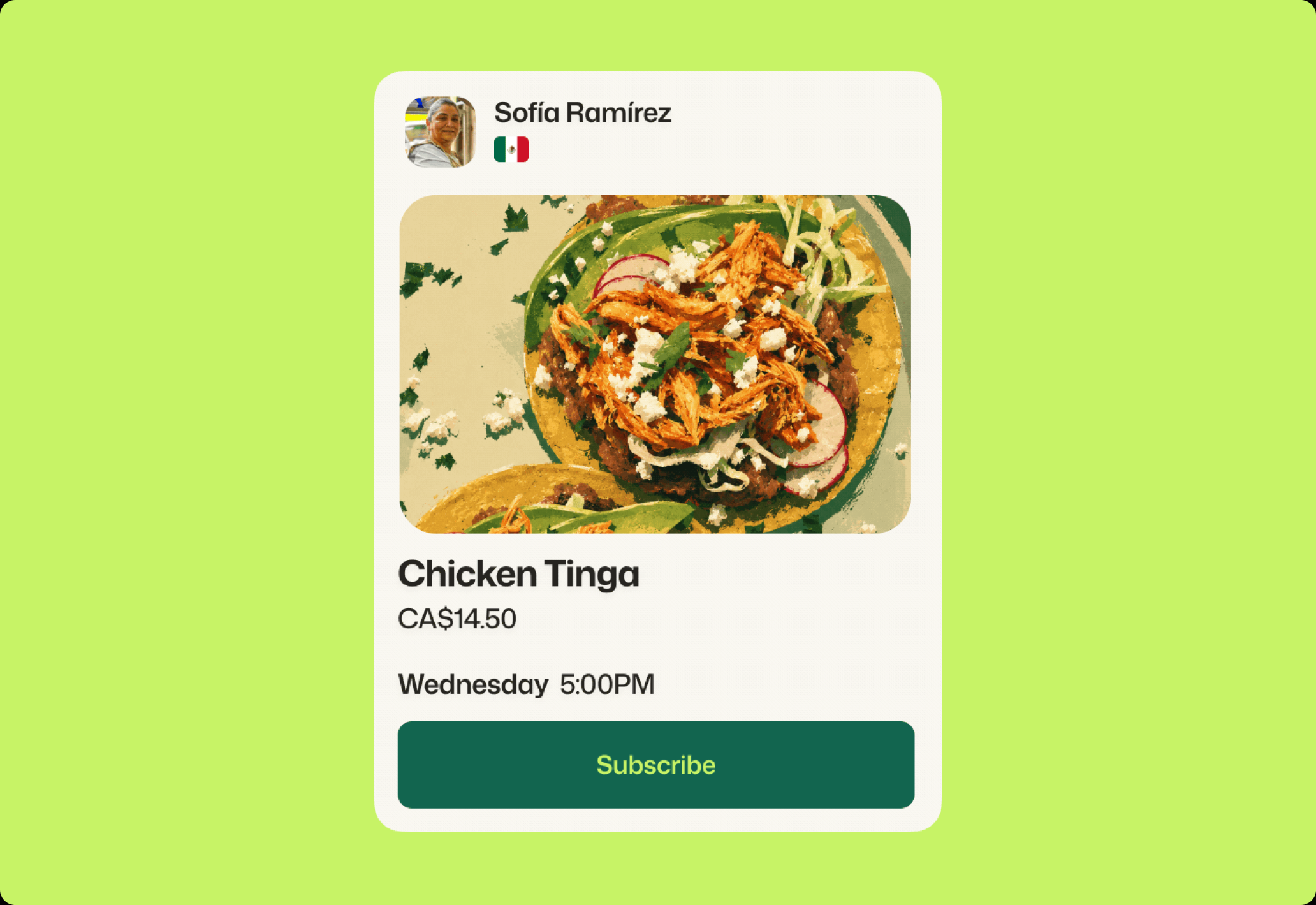
That changed the product model. Instead of subscribing to Needin itself or choosing a rigid weekly package, customers could subscribe to specific meals from specific cooks at the days and timings those cooks could reliably provide them. One person could get weekday lunches from one cook, dinner from another, or several meals from the same cook.That changed the product model. Instead of subscribing to Needin itself or choosing a rigid weekly package, customers could subscribe to specific meals from specific cooks at the days and timings those cooks could reliably provide them. One person could get weekday lunches from one cook, dinner from another, or several meals from the same cook.
What we heardWhat we heard
People wanted variety across the week.People wanted variety across the week.Committing to one cook felt restrictive.Committing to one cook felt restrictive.Cooks needed commitments before buying ingredients.Cooks needed commitments before buying ingredients.
Subscription needed to happen at the meal + schedule levelSubscription needed to happen at the meal + schedule level
Product DecisionsProduct Decisions
Flexibility for customers had to become certainty for cooks.Flexibility for customers had to become certainty for cooks.
Every subscription choice needed to resolve into a clear production plan before the cook entered the kitchen.Every subscription choice needed to resolve into a clear production plan before the cook entered the kitchen.
Cooks define what they can make, which days they can make it, available meal windows and how many portions they can support. Customers subscribe within those constraints. As subscriptions accumulate, Needin can turn individual choices into a predictable schedule of committed portions for each cook.Cooks define what they can make, which days they can make it, available meal windows and how many portions they can support. Customers subscribe within those constraints. As subscriptions accumulate, Needin can turn individual choices into a predictable schedule of committed portions for each cook.
Decision I droveDecision I drove
System consequenceSystem consequence
What this unlockedWhat this unlocked
Move from platform-level subscription to meal-level recurring commitments.Move from platform-level subscription to meal-level recurring commitments.
Every subscription had to resolve into a meal, quantity, date and delivery window.Every subscription had to resolve into a meal, quantity, date and delivery window.
The same underlying model could power both the customer plan and the cook’s production schedule.The same underlying model could power both the customer plan and the cook’s production schedule.
The ProductThe Product
Build your week around the food you actually want.Build your week around the food you actually want.
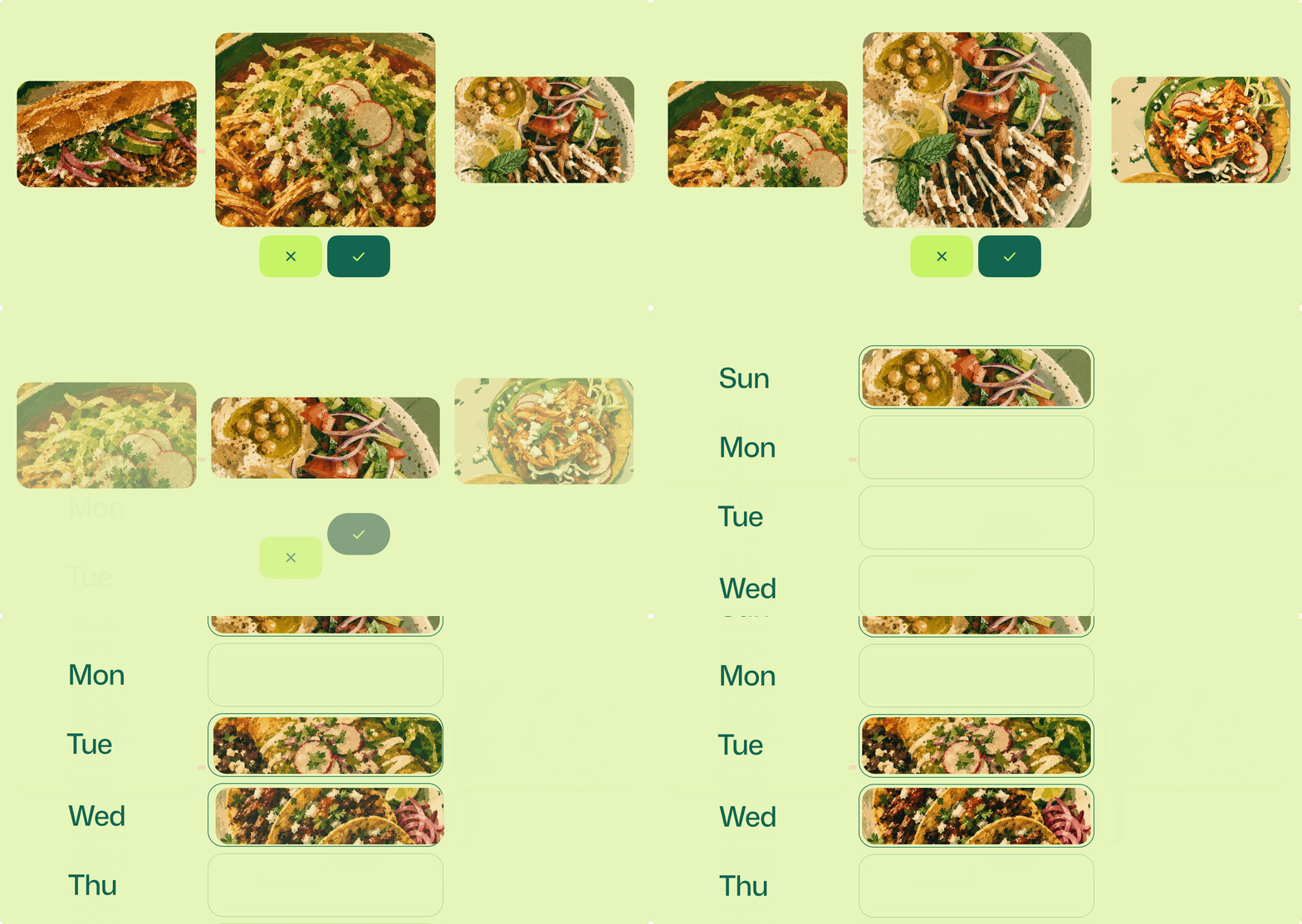
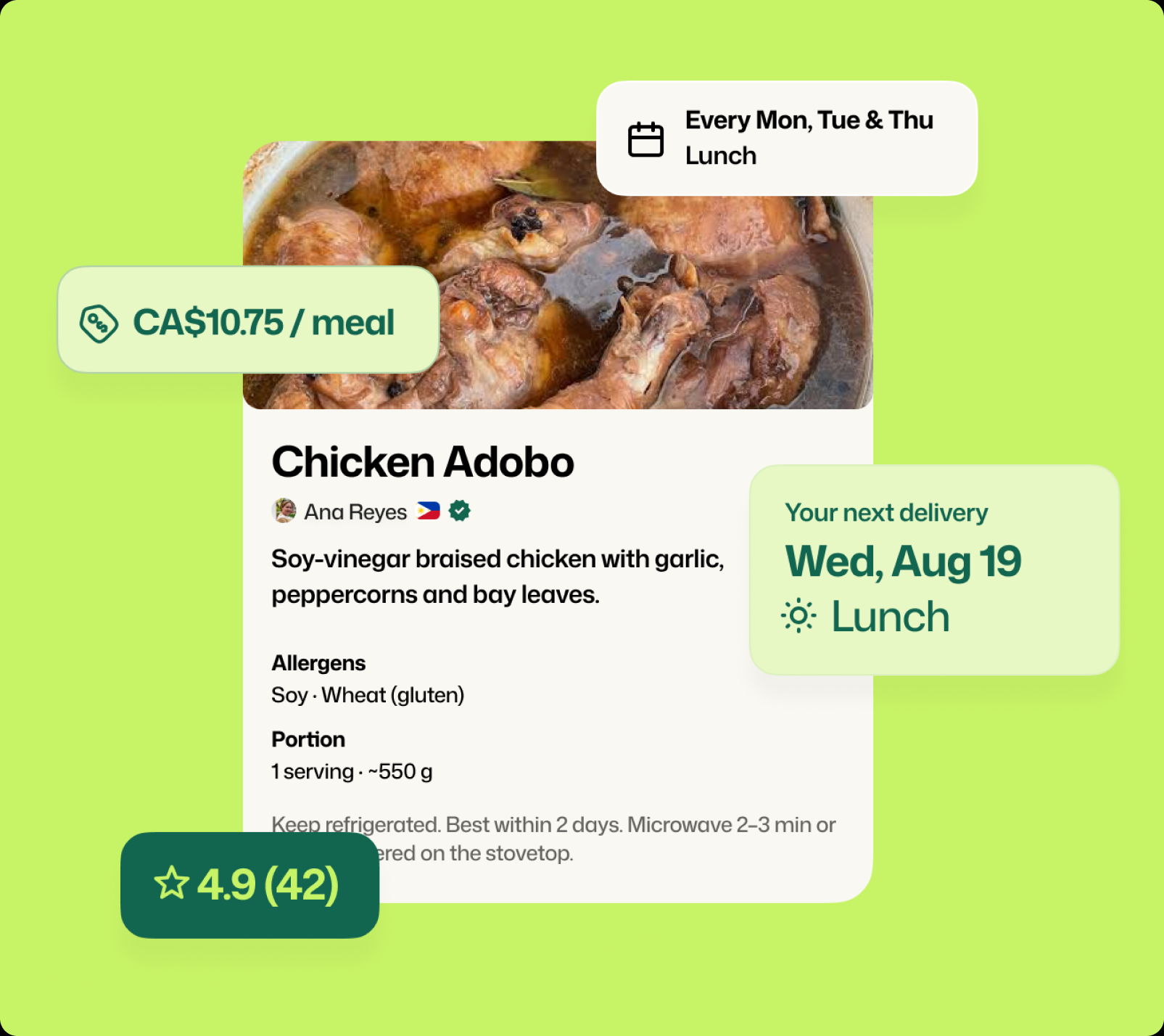
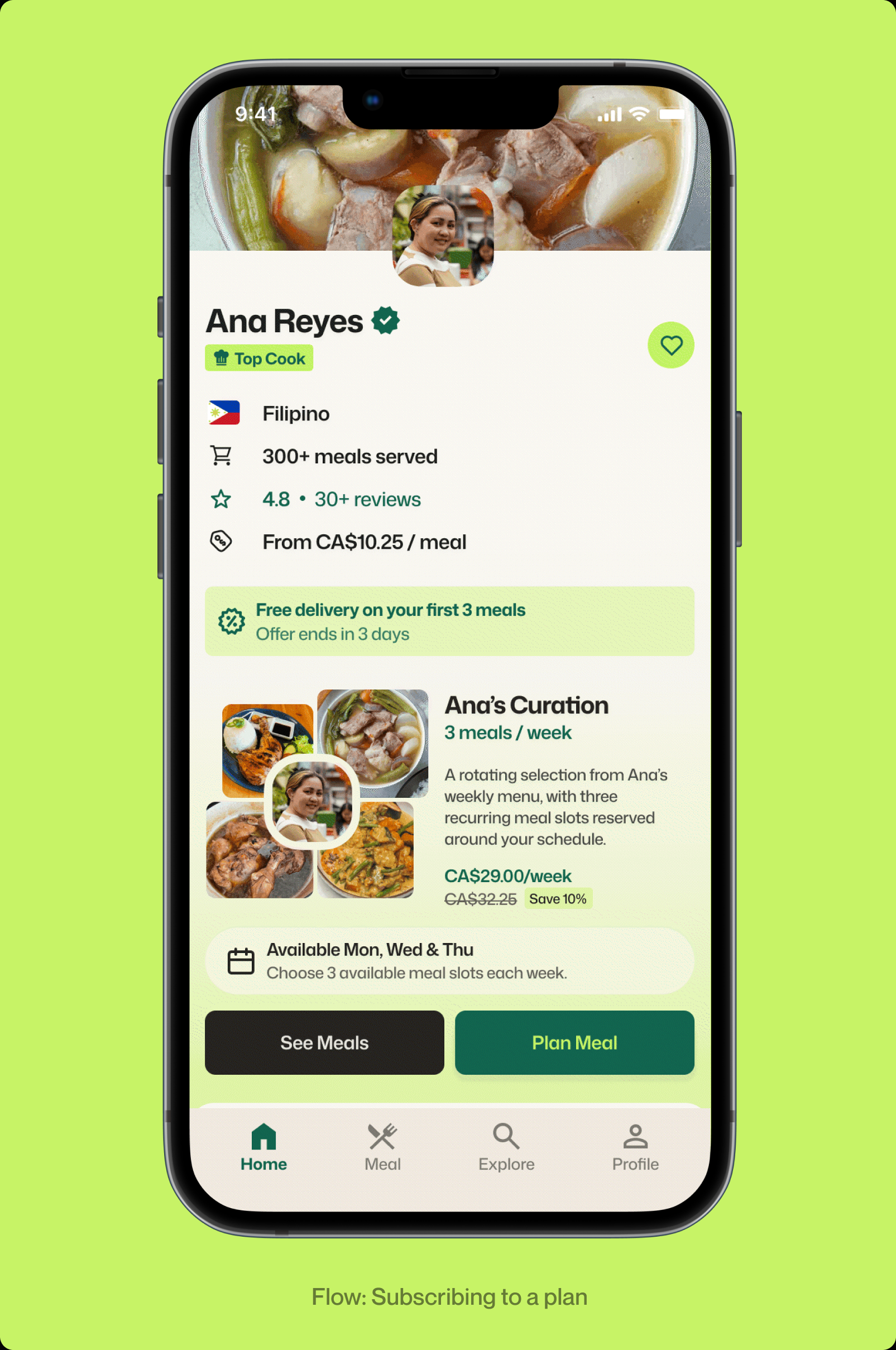
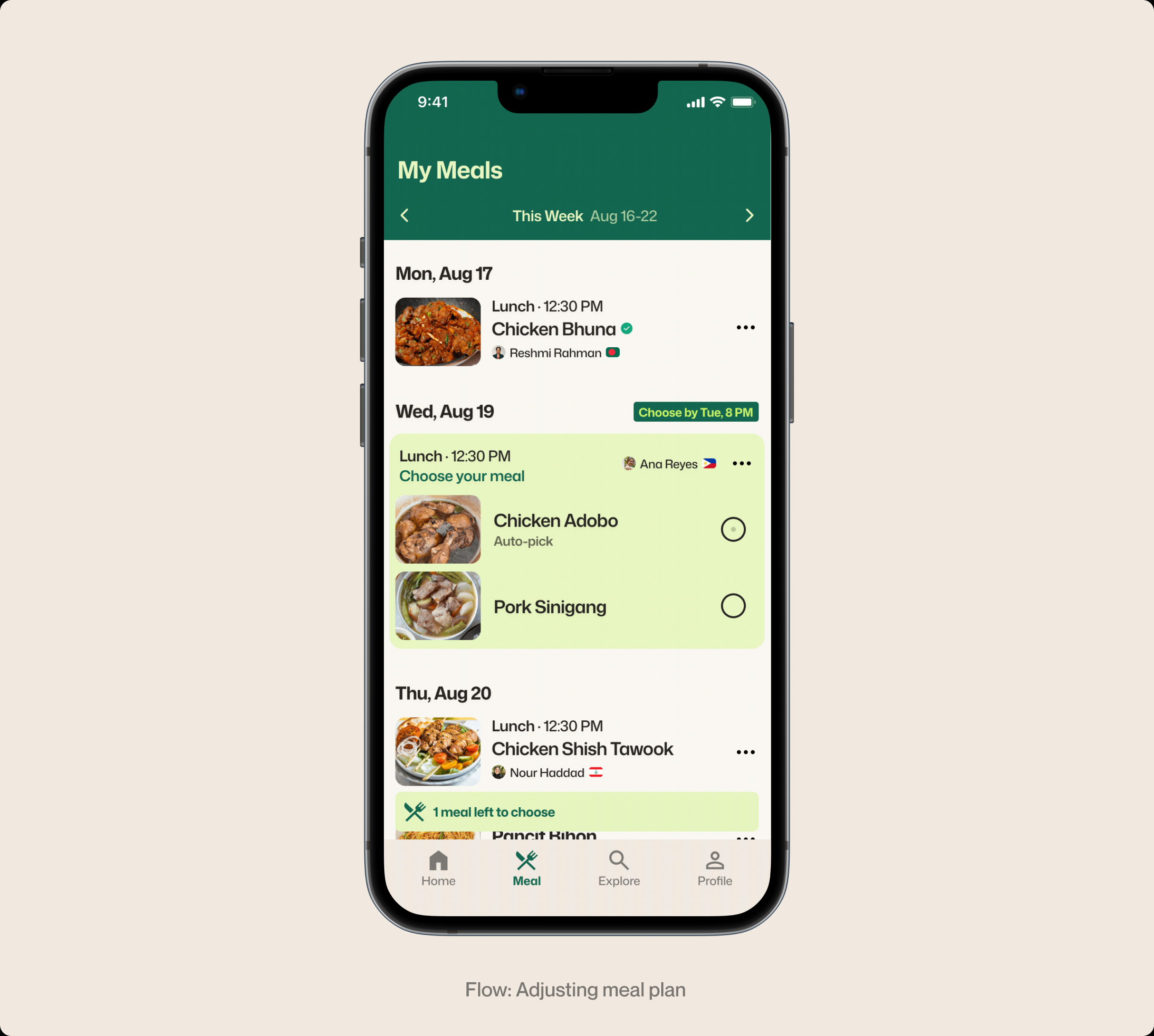
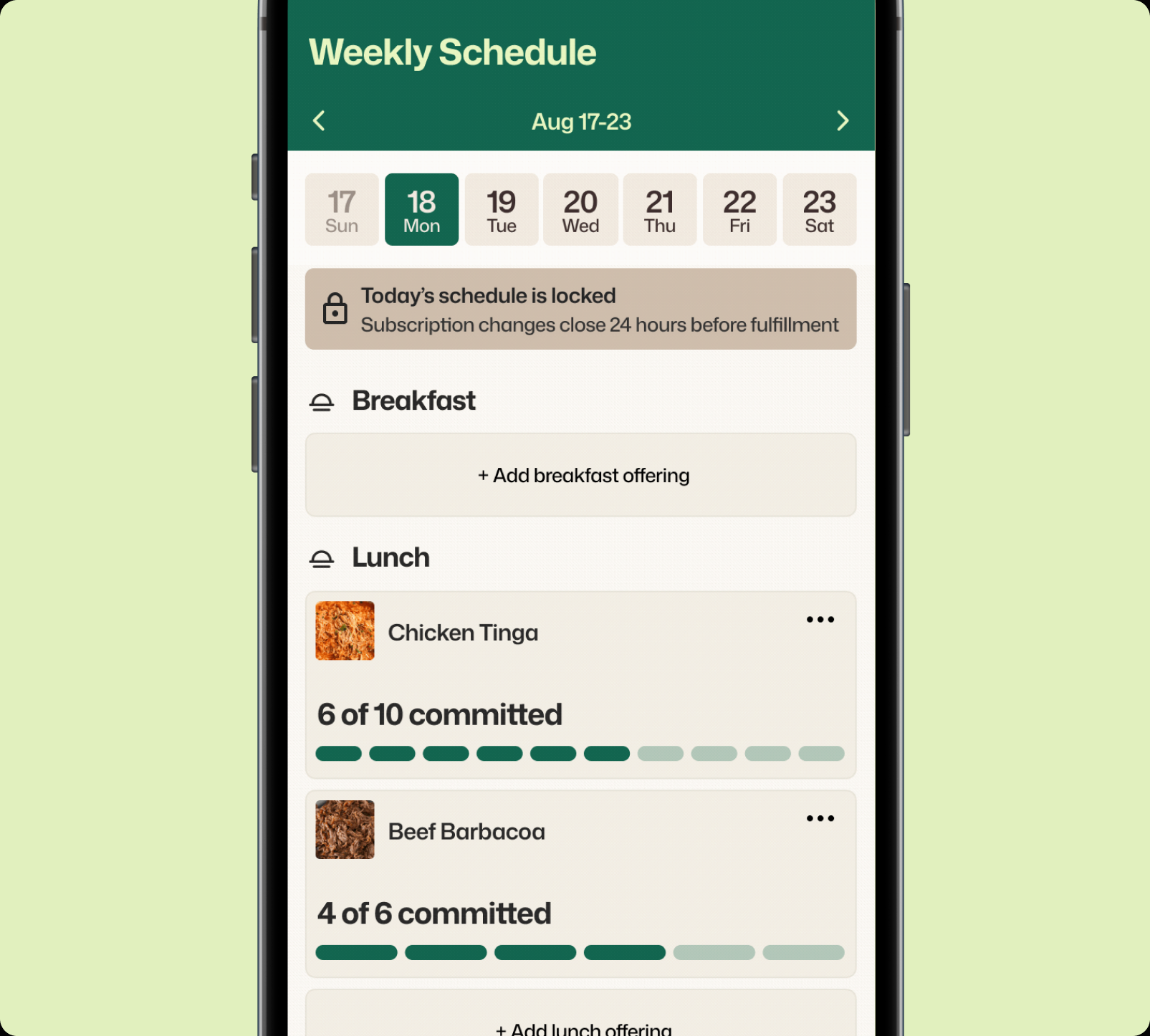
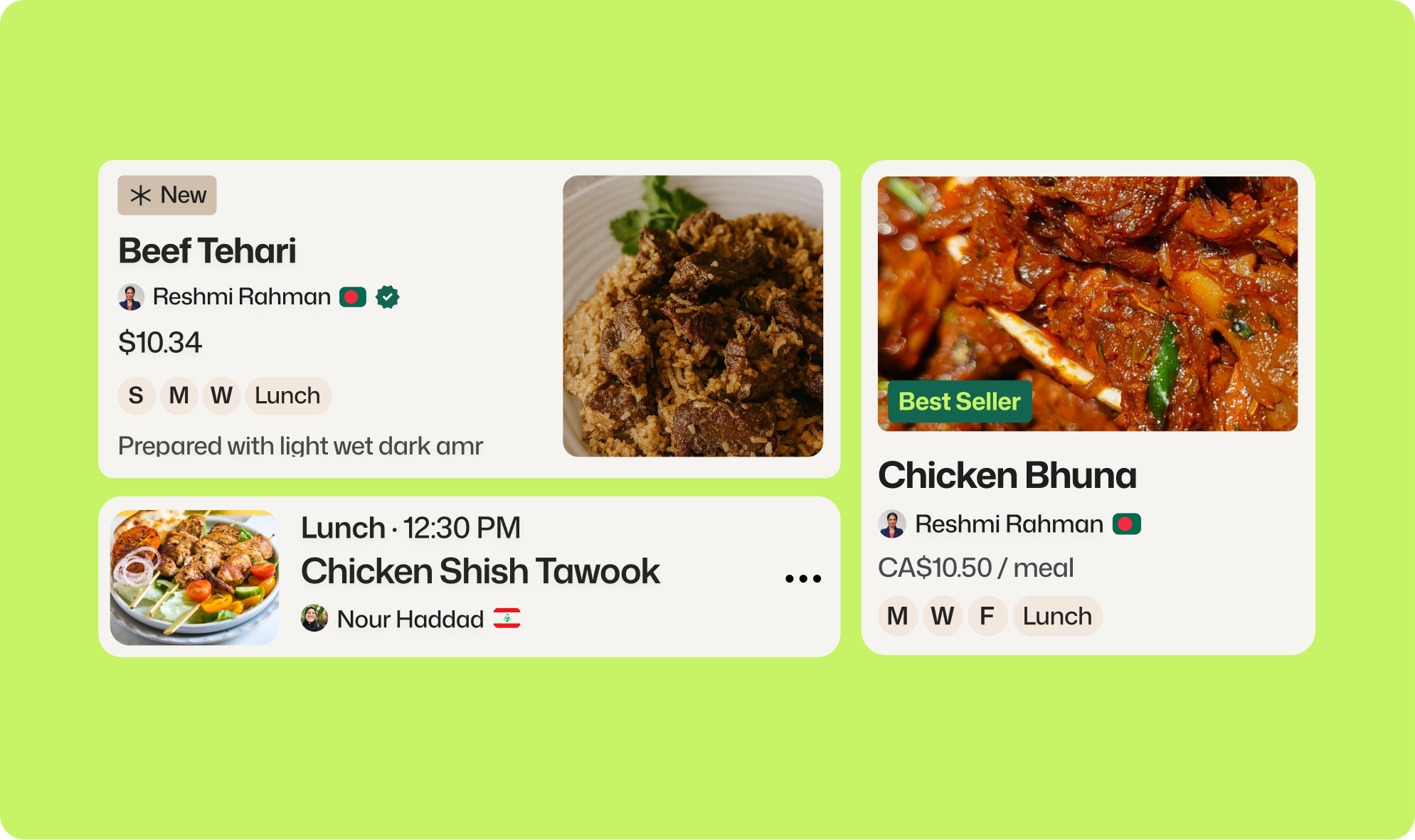
Customers can mix cooks, meals and schedules while Needin keeps the resulting subscription understandable as one weekly plan.Customers can mix cooks, meals and schedules while Needin keeps the resulting subscription understandable as one weekly plan.
choice on one side.choice on one side.certainty on the other.certainty on the other.
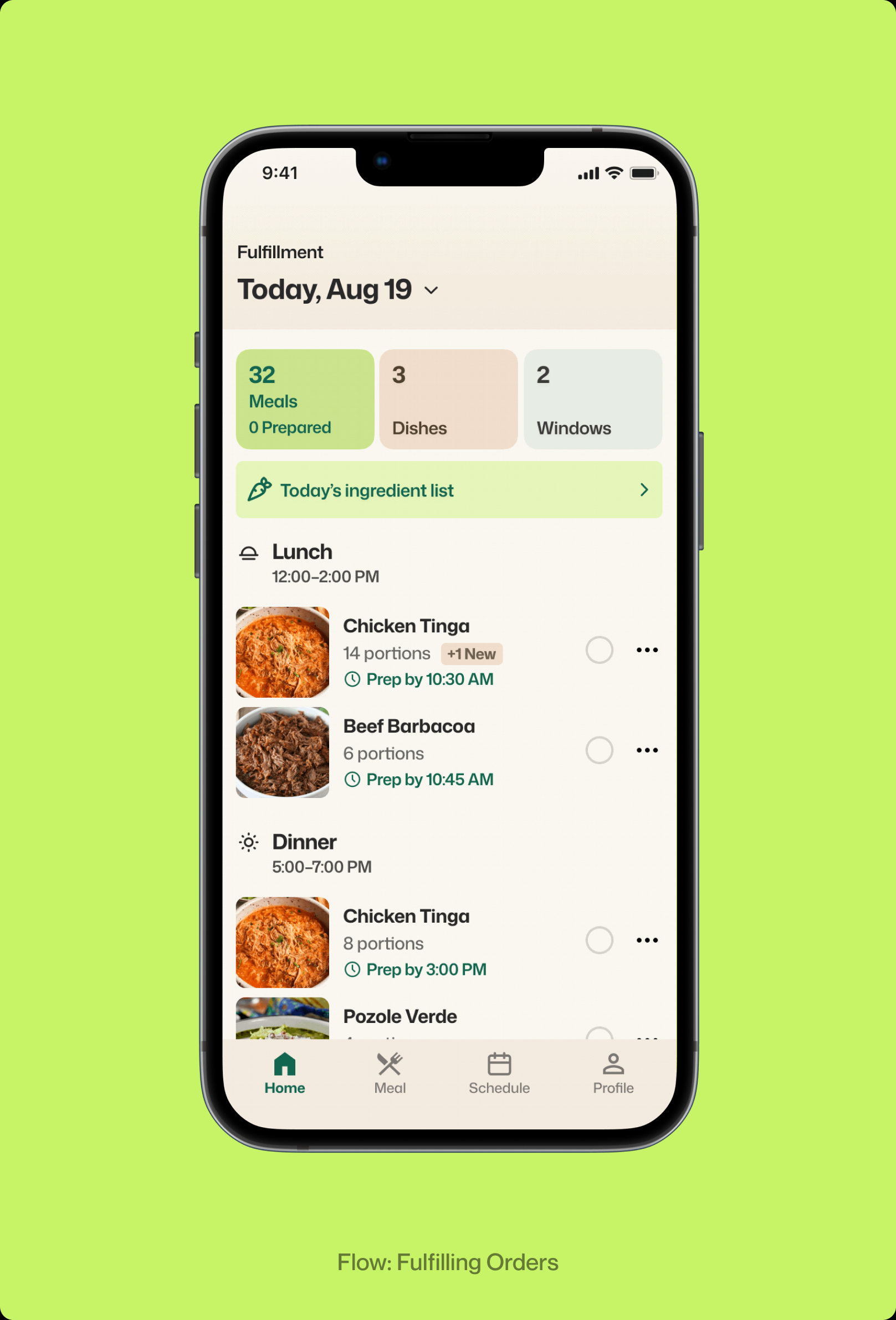
The same subscription becomes a plan for the customer and a production schedule for the cook.The same subscription becomes a plan for the customer and a production schedule for the cook.
The product only works when changes on either side remain understandable before they become operational problems.The product only works when changes on either side remain understandable before they become operational problems.
Flow: Managing ScheduleFlow: Managing Schedule
Brand & SystemBrand & System
A marketplace built around people should feel humanA marketplace built around people should feel human
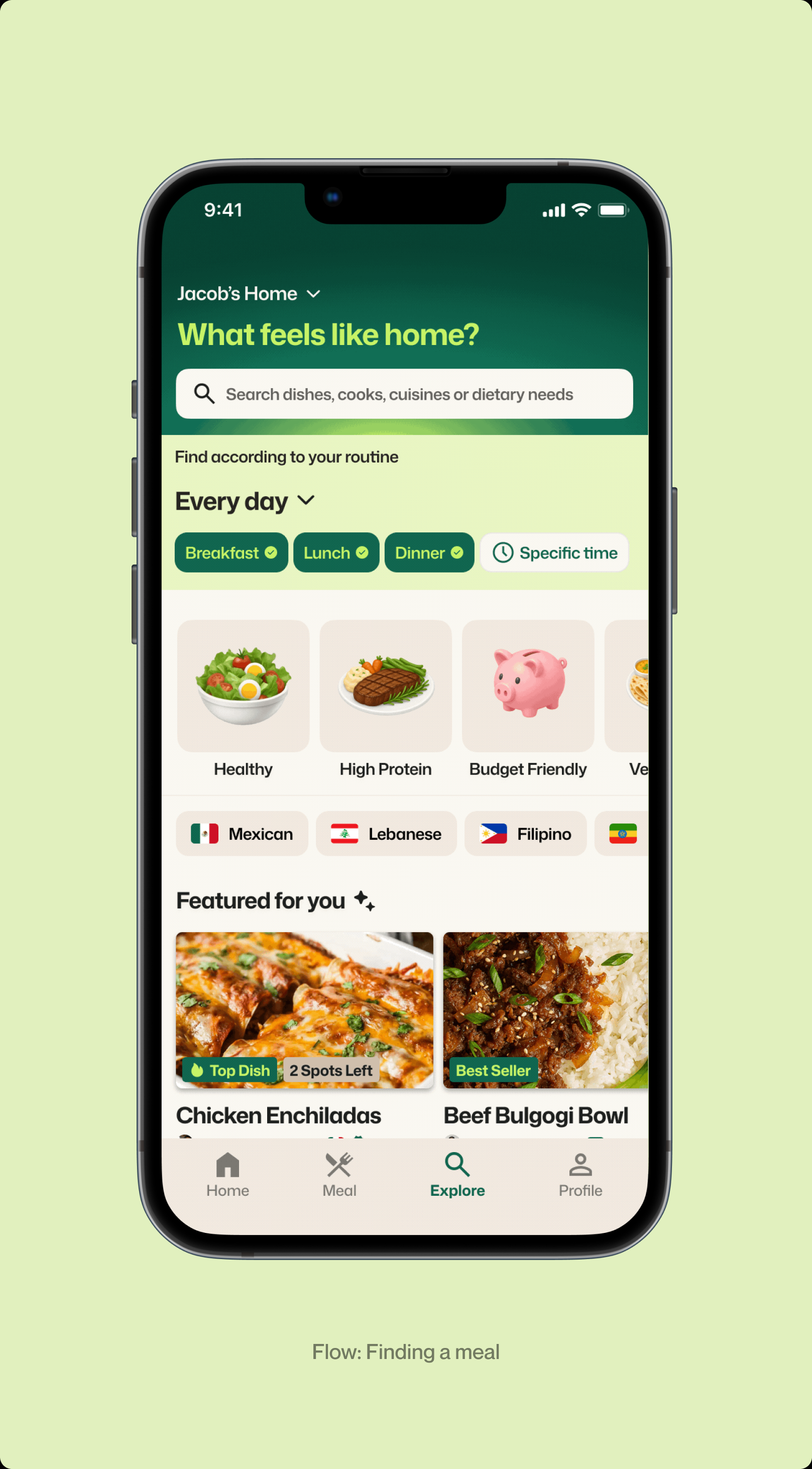
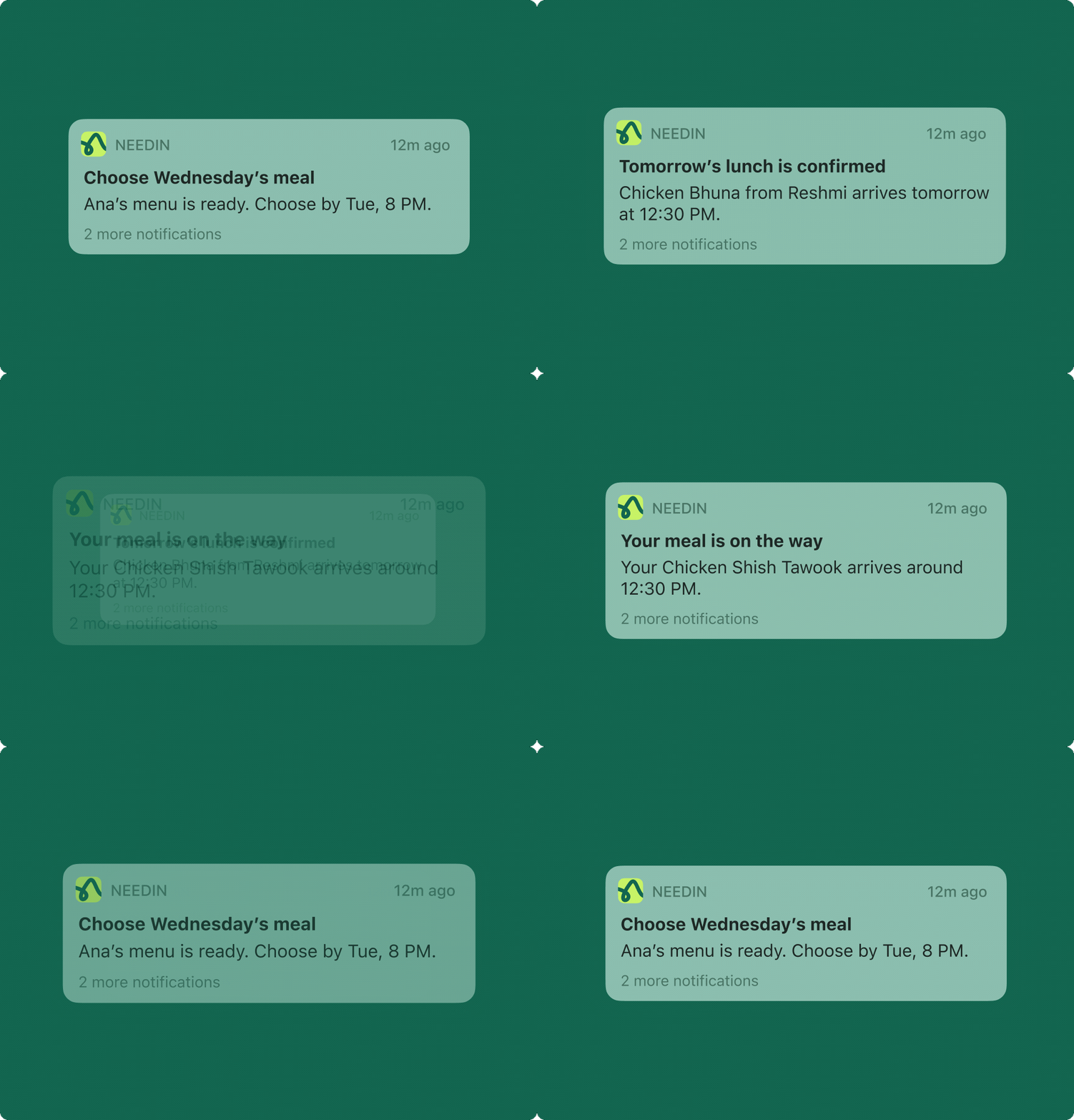
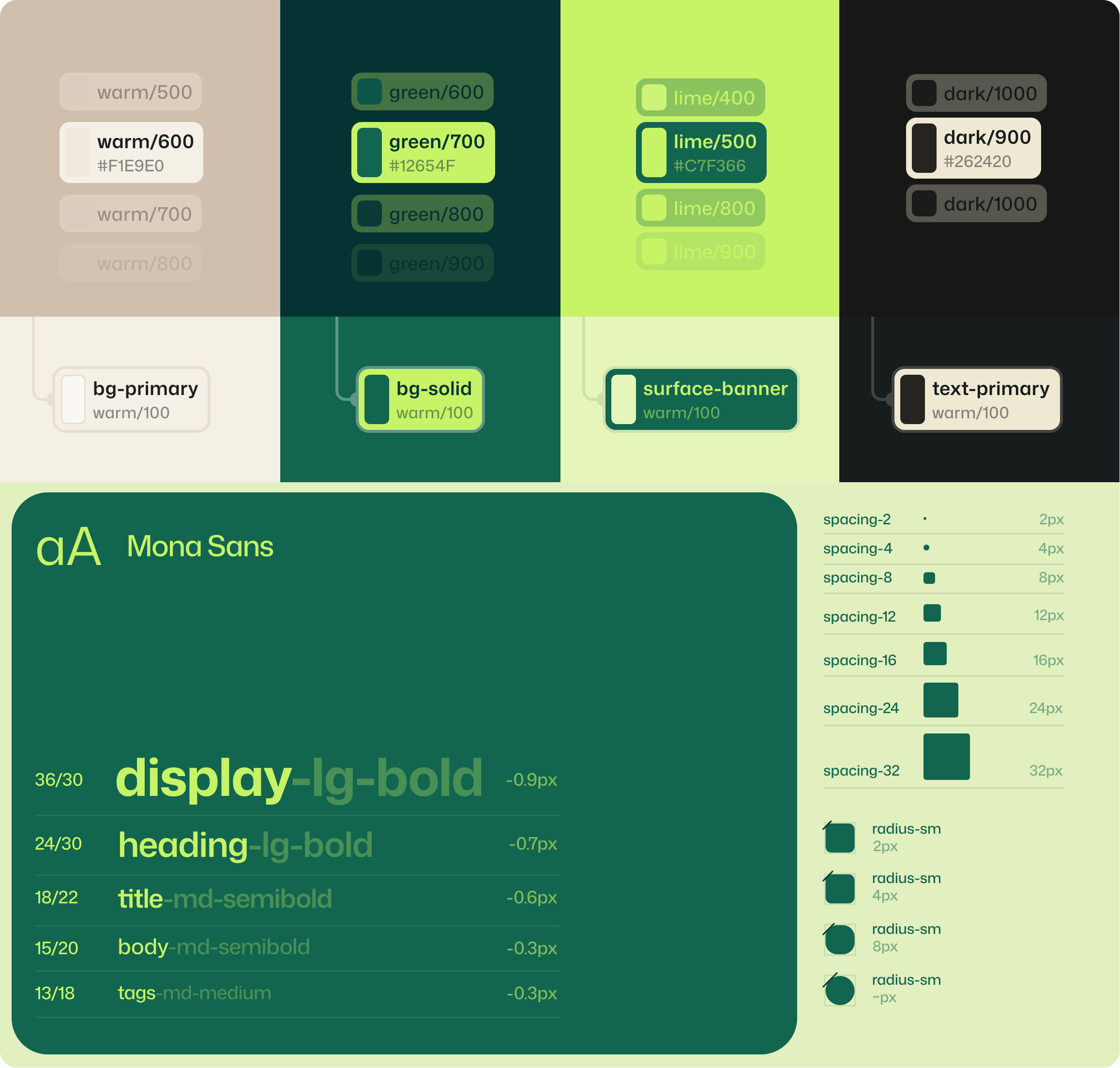
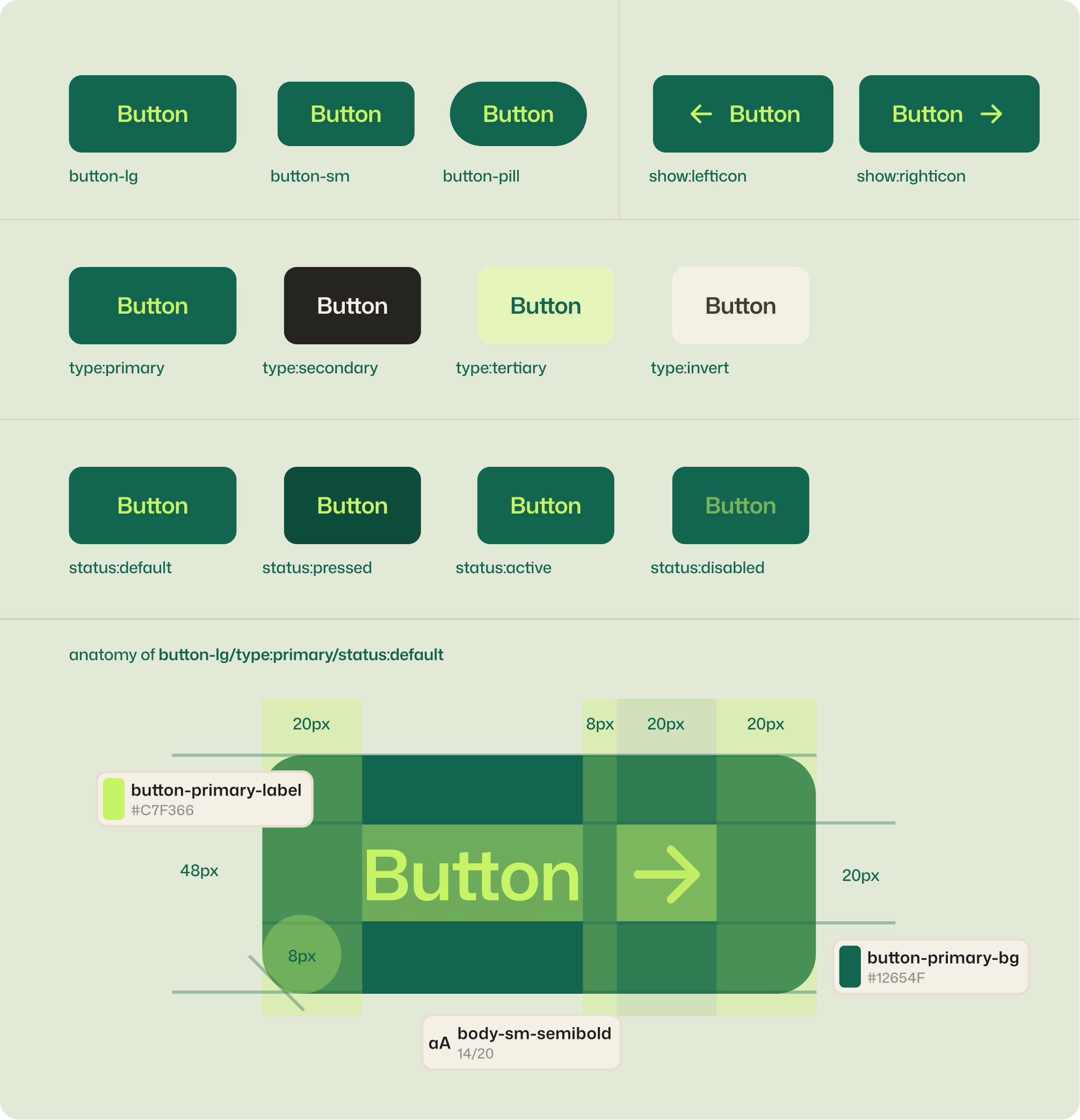
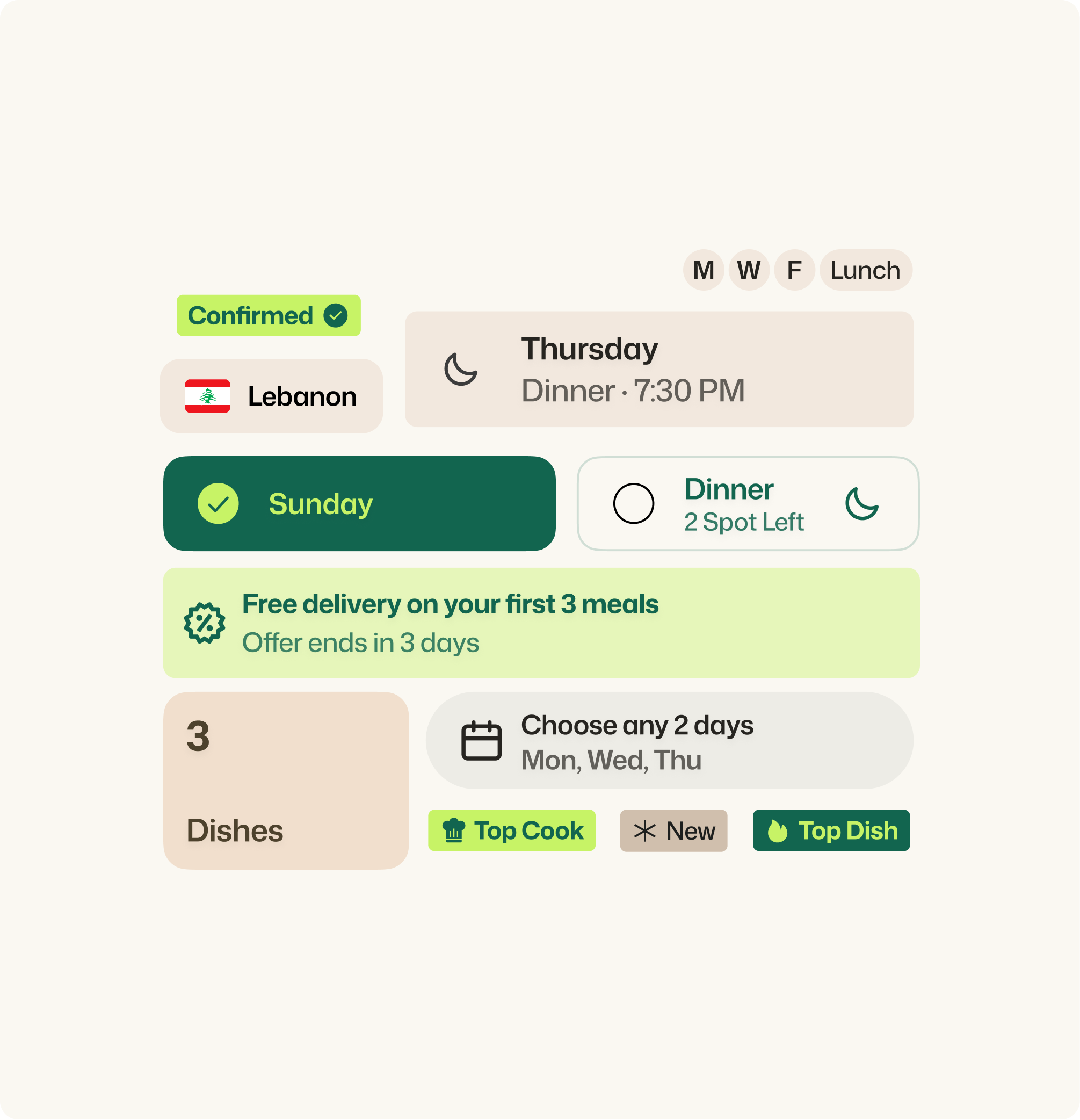
The visual and interaction system balanced food discovery with the practical language of recurring meals, schedules, cooks and subscription states. Reusable patterns kept planning predictable across the product while the brand, imagery and motion preserved the personality of the people and food behind it.The visual and interaction system balanced food discovery with the practical language of recurring meals, schedules, cooks and subscription states. Reusable patterns kept planning predictable across the product while the brand, imagery and motion preserved the personality of the people and food behind it.
What we learned from betaWhat we learned from beta
Customers could understand the meal-level subscription model.Customers could understand the meal-level subscription model.People could build a weekly plan across different meals, cooks and time slots.People could build a weekly plan across different meals, cooks and time slots.Cook-defined availability and capacity could coexist with meaningful customer choice.Cook-defined availability and capacity could coexist with meaningful customer choice.The same subscription structure could translate customer selections into an actionable schedule for cooks.The same subscription structure could translate customer selections into an actionable schedule for cooks.The core experience was understandable enough to move from concept into early product use.The core experience was understandable enough to move from concept into early product use.
What we couldn’t know yetWhat we couldn’t know yet
The beta was too early to establish the long-term economics and behavior of the marketplace. Retention, subscription frequency, cook utilization, supply-demand balance and unit economics would have required sustained usage at a larger scale.The beta was too early to establish the long-term economics and behavior of the marketplace. Retention, subscription frequency, cook utilization, supply-demand balance and unit economics would have required sustained usage at a larger scale.
ReflectionReflection
The subscription wasn’t the business model sitting behind the product. It was the product.The subscription wasn’t the business model sitting behind the product. It was the product.
The key design problem was finding a structure that could make flexible choice and predictable home cooking coexist.The key design problem was finding a structure that could make flexible choice and predictable home cooking coexist.
Needin reinforced that marketplace experiences cannot be designed from only one side. Giving customers unlimited flexibility would make the cooks work harder; optimizing entirely for cooks would make the service too rigid to be useful. The product became stronger when those constraints were treated as one connected system rather than separate interfaces.Needin reinforced that marketplace experiences cannot be designed from only one side. Giving customers unlimited flexibility would make the cooks work harder; optimizing entirely for cooks would make the service too rigid to be useful. The product became stronger when those constraints were treated as one connected system rather than separate interfaces.
My RoleMy Role
Experience, Brand & StrategyExperience, Brand & Strategy
My role spanned product strategy, marketplace thinking and end-to-end product design.My role spanned product strategy, marketplace thinking and end-to-end product design.
I helped shape how Needin worked as a two-sided service, translating customer needs, cook constraints and business goals into the subscription model, service structure and core product experience.I helped shape how Needin worked as a two-sided service, translating customer needs, cook constraints and business goals into the subscription model, service structure and core product experience.
I led the experience from information architecture and key user flows through interaction and interface design, while working through the operational rules behind scheduling, meal selection, cook availability and recurring service.I led the experience from information architecture and key user flows through interaction and interface design, while working through the operational rules behind scheduling, meal selection, cook availability and recurring service.
ContributionsContributions
Customer & cook researchCustomer & cook researchMarketplace strategyMarketplace strategySubscription modelSubscription modelService designService designProduct prioritizationProduct prioritizationInformation architectureInformation architectureUser flowsUser flowsUX/UIUX/UIInteraction designInteraction designPrototypingPrototypingDesign systemDesign system
next projectnext project
RideCentric+RideCentric+
 see all work→